Herbs are not only great in meals for spice and added flavor but are key to the nutritional density in the foods you eat. Herbs can protect you against diseases, clear toxins from your body, and provide you with vitamins and minerals.
Here are some examples of such, from a list of nine assembled by Planet Green:
Basil
Basil provides Vitamins A, C, and K, along with iron, manganese, magnesium, and potassium. Loaded with flavonoids, basil helps prevent cell damage from radiation and oxygen.
Ginger
Treat nausea and an upset stomach with ginger; prevent and treat the common cold with its antiviral components.
Fenugreek
This Mediterranean herb is good for menstrual cramps, menopause symptoms, cholesterol, and diabetes.
Flat Leaf Parsley
Parsley is renowned for containing high levels of antioxidants and is full of vitamins, minerals, and dietary fiber that help balance cholesterol and ward off constipation.
Turmeric
The Cork Cancer Research Centre's test results show that turmeric can kill gullet cancer cells in 24 hours!
Dr. Mercola's Comments:
Believe it or not, but common herbs and spices are actually some of the healthiest foods on the planet—topping the list of high ORAC value foods—so you can easily boost the nutritional value of your meal simply by spicing it up a bit. ORAC is a standardized method of measuring the antioxidant capacity of different foods and supplements. The higher the ORAC score, the more effective a food is at neutralizing harmful free radicals.
So, every time you flavor your meals with herbs or spices you are literally "upgrading" your food without adding a single calorie.
The Secret Powers of Herbs and Spices
But scoring high on the ORAC isn't the only reason why herbs and spices pack such a powerful punch. They're also very dense in other nutrients such as vitamins and minerals, and because of their nutrient density, they're also thermogenic, meaning they naturally increase your metabolism.
Additionally, herbs and spices have medicinal properties. This should come as no surprise considering they've been used as medicine for thousands of years prior to the advent of modern medicine that focuses on synthetic drugs in lieu of these natural counterparts.
Lastly, spices can "upgrade" your meal by reducing toxic compounds created during the cooking process. A study published last year discovered that adding an antioxidant-rich spice blend to meat prior to cooking reduced the level of malondialdehyde (a chemical marker for oxidation) in the meat by 71 percent and levels in participants' urine by 49 percent.
You can easily recreate this simply by mixing the dry spices together and rubbing them onto the meat before you quickly sear it, or add them to your marinade.
You can also help prevent the formation of toxic heterocyclic amines (HCAs) byadding blueberries or cherries to your burgers. HCAs form when food is cooked at high temperatures, and they're linked to cancer. In terms of HCA, the worst part of the meat is the blackened section, which is why you should always avoid charring your meat, and never eat blackened sections.
Which Herbs and Spices are the Most Potent Disease Preventers?
Each spice has a unique set of health benefits to offer, but one study, published in the Journal of Medicinal Foods, found a direct correlation between the antioxidant phenol content of many extracts of spices and herbs, and their ability to inhibit glycation and the formation of AGE compounds, making them potent preventers of heart disease and premature aging.
According to this study, the top 10 most potent herbs and spices are:
1. Cloves (ground)
2. Cinnamon (ground)
3. Jamaican allspice (ground)
4. Apple pie spice (mixture)
5. Oregano (ground)
6. Pumpkin pie spice (mixture)
7. Marjoram
8. Sage
9. Thyme
10. Gourmet Italian spice
Selecting Spices for Their Medicinal Benefits
As a general rule, you really can't go wrong when using herbs and spices and I recommend allowing your taste buds to dictate your choices when cooking. However, you can also choose spices based on their medicinal benefits.
Here are some examples of herbs and spices that you may want to consider incorporating more of into your diet to achieve a certain aim:
To boost your immune system:
Licorice: Buffers the inflammatory response by increasing steroid output by your adrenal glands; a good buffer if your immune system is over responding to the flu.
Turmeric: a general immune system booster due to its high antioxidant capacity. Turmeric is 5 to 8 times stronger than vitamins C and E, and even strong enough to scavenge the hydroxyl radical, which is considered by some to be the most reactive of all oxidants.
Black Pepper: Increases the bioavailability of just about all other foods -- herbs and other compounds.
Oregano: The active agent is rosmarinic acid, a strong antioxidant.
To reduce inflammation, and treat inflammatory and infectious conditions:
Turmeric: Its potent anti-inflammatory properties come from curcumin -- the pigment that gives turmeric its yellow-orange color, and which is thought to be responsible for many of its medicinal effects. There are an estimated three to five grams of curcumin in 100 grams of turmeric. Curcumin has been shown to influence more than 700 genes, and it can inhibit both the activity and the synthesis of cyclooxygenase-2 (COX2) and 5-lipooxygenase (5-LOX), as well as other enzymes that have been implicated in inflammation.
Cloves: One of the most potent anti-inflammatories with anti-bacterial and antioxidant properties. Beneficial against muscle pains from injuries, arthritis and rheumatism. It also contains eugenol and its mild anesthetic benefits are useful for toothaches, gum pain and sore throats. Also offers relief from respiratory ailments such as asthma and bronchitis, and eliminates intestinal parasites, fungi and bacteria.
Nutmeg: A study in the Journal of Bioscience and Bioengineering found that nutmeg extract has antibacterial activity that can significantly reduce certain strains of E. coli. Nutmeg is also beneficial for joint pain and gout, and nutmeg oil has been traditionally used to treat toothaches. ** Please note that nutmeg contains volatile oils comprised of alkyl benzene derivatives, terpenes and myristic acid. The spice has a long history of abuse; taking too much nutmeg (one to three nuts; in some cases less) can cause side effects such as nausea,hallucinations, swelling and shock.
Ginger: Has anti-inflammatory properties and helps protect against bacteria and fungi. Also eliminates intestinal gas and relaxes and soothes your intestinal tract, while boosting your immune system. Can alsoprotect against atherosclerosis by lowering cholesterol levels and preventing the oxidation of low density lipoprotein (LDL).
Peppermint: Traditionally used to sooth the digestive tract; a study published in the journal BMJ in 2008 found peppermint oil may even be beneficial in the treatment of irritable bowel syndrome. Also known to inhibit the growth of bacteria and fungi, and can help relieve symptoms of allergies and asthma.
Cinnamon: A powerful antimicrobial agent that also enhances your antioxidant defenses. It's been found to kill E. coli and many other bacteria. Its anti-inflammatory compounds help relieve pain and stiffness of muscles and joints due to arthritis. Also helps prevent urinary tract infections, tooth decay and gum disease.
To boost mental health and/or reduce anxiety:
Nutmeg: According to a study published in the Journal of Medicinal Food, an extract of nutmeg seeds elicited a significant antidepressant-like effect in mice; in some doses comparable in potency to the antidepressants imipramine and fluoxetine. In fact, reducing anxiety and treating insomnia are two ailments that nutmeg has been traditionally used for.
Natural salt: According to a 2008 study published in the journal Physiology & Behavior, salt may be a natural mood-elevating substance. Sodium deficiency can induce behavioral changes such as reduced motivation, fatigue, and feelings of depression. However, it's important to understand that common table salt and the salt used in processed foods is the highly processed variety, and NOT at all the same as the natural salt your body needs to perform its vital functions, including the maintenance of proper brain function. So when adding salt to your meal, make sure you're using a natural unprocessed salt, such as Himalayan salt.
Turmeric—A Potent Cancer-Fighter!
A couple of spices deserve further review; one of which is turmeric. It was already mentioned twice above, both as an immune booster and potent anti-inflammatory. But perhaps its greatest value lies in its anti-cancer potential.
In India where turmeric is widely used, the prevalence of four common U.S. cancers -- colon, breast, prostate and lung -- is 10 times lower. In fact, prostate cancer, which is the most frequently diagnosed cancer in U.S. men, is rare in India and this is attributed, in part, to the curcumin in turmeric.
Dr. William LaValley from Austin Texas is one of the top natural medicine cancer physicians I know and he recently shared this important information with me. Interestingly, curcumin—the active ingredient in turmeric—actually has the most evidence based literature backing up its anti-cancer claims of any other nutrient!
Numerous studies have looked into this potential cancer-fighting link, with promising results. For instance, curcumin has been found to:
Inhibit the transformation of cells from normal to tumor, as well as inhibit the proliferation of tumor cells already existing
Help your body destroy mutated cancer cells so they cannot spread throughout your body
Decrease inflammation
Enhance liver function
Inhibit the synthesis of a protein thought to be instrumental in tumor formation
Prevent the development of additional blood supply necessary for cancer cell growth (known as anti-angiogenesis)
Curcumin affects over 100 different pathways once it gets into a cell. Interestingly, this also applies to the metabolite of curcumin and its derivatives, which also have anti-cancer properties. According to researchers from the University of Texas M.D. Anderson Cancer Center, curcumin blocks a key biological pathway needed for development of melanoma and other cancers.
The spice actually stops laboratory strains of melanoma from proliferating and pushes the cancer cells to commit suicide by shutting down nuclear factor-kappa B (NF-kB), a powerful protein known to induce abnormal inflammatory response that leads to an assortment of disorders such as arthritis and cancer.
Best of all, curcumin appears to be safe in the treatment of all cancers!
To get the full benefits that curcumin has to offer, you will want to look for a turmeric extract with at least 95 percent curcuminoids that contains only 100 percent certified organic ingredients.
The formula should be free of fillers, additives and excipients (a substance added to the supplement as a processing or stability aid), and the manufacturer should use safe production practices at all stages: planting, cultivation, selective harvesting, and then producing and packaging the final product.
The other spice I want to review further is cinnamon, simply because of its potential benefits against diabetes, which is a problem of epidemic proportions in the US.
Among this spice's most impressive health benefits is its impact on blood sugar and ability to improve glucose control. For example, just half a teaspoon of cinnamon a day has been shown to significantly reduce blood sugar levels, triglycerides, LDL (bad) cholesterol, and total cholesterol levels in people with type 2 diabetes. In another earlier study, cinnamon was found to increase glucose metabolism 20-fold!
Interestingly, cinnamon lowers your blood sugar by acting on several different levels, including:
Slowing the emptying of your stomach to reduce sharp rises in blood sugar following meals
Improving the effectiveness, or sensitivity, of insulin
Enhancing your antioxidant defenses. A study published in 2009 stated that "polyphenols from cinnamon could be of special interest in people that are overweight with impaired fasting glucose since they might act both as insulin sensitizers and antioxidants." Yet another bioflavanoid compound called proanthocyanidin may alter the activity of insulin signaling in your fat cells.
Researchers have suggested people with diabetes may see improvements by adding 1/4 - 1 teaspoon of cinnamon to their food, and I see no reason not to give this a try if you enjoy cinnamon (along with doing the other essentials to improve diabetes, including eliminating fructose and grains from your diet and exercising daily).
Clearly, adding ample amounts of cinnamon to your diet is an incredibly inexpensive and great tasting tool for diabetics, and the likelihood of this food causing any long-term complications is very small.
Go Ahead, Spice Up Your Life!
All these benefits give you ample reasons to be adventurous in adding spices to your meals, and to be generous in the amounts you use. It will be worth it for the flavor enhancement alone, and the boost it will give your health is the icing on the cake!
Scientists Ian Yeoman and Michelle Mars have imagined what a brothel will look like in 2050 and say android sex workers will help stamp out people trafficking and STIs
Experts say robot sex workers will change the face of the industry
Experts say sex robot prostitutes are just around the corner - and will help fight people trafficking and the spread of sexual diseases.
According to a bizarre paper in an academic journal, red-light districts will be transformed by 2050 with the introduction of the robotic sex workers.
Ian Yeoman, a scientist specialising in futurology, and Michelle Mars, a sexologist at the University of Wellington, co-authored a paper entitled "Robots, Men and Sex Tourism".
In the paper, they imagine an Amsterdam brothel in 2050.
Getty
Ian Yeoman and Michelle Mars have imagined what an Amsterdam brothel will be like in the year 2050
They base it on Yub-Yum, which closed in 2008 but was once considered one of Amsterdam's most exclusive brothels.
The paper reads: "Yub-Yum is modern and gleaming with about 100 scantily clad blondes and brunettes parading around in exotic G-strings and lingerie .
"Entry costs $10,000 for an all inclusive service. The club offers a full range of sexual services from massages, lap dancing and intercourse in plush surroundings.
"The Yub-Yum is a unique bordello licensed by the city council, staffed not by humans but by androids."
Yeoman and Mars go on to describe how the futuristic brothel came about because of a spoke in human trafficking in the sex industry in the 2040s.
They also predict a growing problem with incurable Sexually Transmitted Infections (STIs), particularly HIV, which they say will mutate and become resistant to vaccines.
Th pair claim Yub-Yum will feature robots of all ethnicities, body shapes, ages, languages and sexual features. But the most popular, they say, is tall, blonde, Russian android 'Irina', who is a particular favourite of Middle Eastern businessmen.
Getty
True Companion sex robot, Roxxxy was the next big thing five years ago, but tech has advanced
It continues: "The tourists who use the services of Yub-Yum are guaranteed a wonderful and thrilling experience, as all the androids are programmed to perform every service and satisfy every desire.
"All androids are made of bacteria resistant fiber and are flushed for human fluids, therefore guaranteeing no Sexual Transmitted Diseases are transferred between consumers."
However, according to Yeoman and Mars, while the club will help 'the sex industry alleviate all health and human trafficking problems', human sex workers will be put out of business, unable to compete on price and quality of service.
"Robots, Men and Sex Tourism" appeared in an issue of Futures , an academic journal.
Hundreds of public toilets are closing around the UK, so we asked for your suggestions on how to overcome the problem.
A freedom-of-information request by the BBC revealed that at least 1,782 public toilets have closed in the past decade, with some councils now offering none.
When the need to go becomes overwhelming, what can you do? Here are tips from nine readers to help you in your hour of need.
I carry a wide-necked bottle in my car and one in a rucksack if I go away from the car. Discreet use passes unnoticed. Eric, Worcestershire
There's not many shops that will allow even a small child to use their facilities. Many times I've had to leave in the middle of a shop and help my child to wee around the corner. It's very frustrating and a little embarrassing, but when a child needs to go, they must go. It's not just shopping that is made difficult. Kim, South Wales
I remember this bring discussed when Charles and Diana married and when thousands of people were on the streets of London - something along the lines of needing to shout "pain, pain, pain" and then it was ok to do it (discreetly, I suspect) in the street. Roger, Sussex
I always have a last pee before leaving home. If I am out for a long time then I pop into a pub. Nobody knows you are not a customer, especially if there are people drinking outside. Public toilets have been around for thousands of years - the emperor Vespasian was the first to charge for this service, stating it is not only urine, it is gold. Len, Worcestershire
Image copyrightISTOCKImage captionIt's not only Yorkshire where people have turned to the sea for relief
We're fortunate to have quite a few public toilets open in the daytime hours. However, after 5pm and on the beach with my dogs I have been known to face eastwards and wee in the sea. Nobody can see that I wee when Holland-wards I'm pointing, except perhaps a far out trawler full of fish ready to meet their chips. Will, East Yorkshire
I use a two-pint empty milk container which I carefully cut the top off. This is kept in the boot of my car, along with a small hand towel to provide a cover to prevent any embarrassment. I then stand behind my car and pretend to look for something in the boot. When finished the pee can be emptied down a drain or used to encourage grass growth. I have used this method for many years and even give my friends a gift of a bottle as a "wee present". Brian, Cheshire
I have two children. My youngest has ASD (autism spectrum disorder) so when he needs to go, it is at that point. But when I am out I try to take them to shops that do have toilets so I can make sure that they are both able to go while we are out.Helen, Cambridgeshire
I worked as a meter reader for 10 years and found betting shops and pubs very helpful. I never asked customers. Gordon, Fife
We holidayed in Andalusia last year. There were no public toilets - but every bar and restaurant was legally obliged to provide toilets free of charge to customers and non-customers - and they were pristine. Problem solved. Although there was no expectation to buy anything, we did feel inclined to. It's the 21st Century - time to introduce the same in the UK. If every outlet provides this, no single outlet will be inundated with non-customers using their facilities. Trevor, County Down
Don’t be put off! Works by WG Sebald, Roberto Bolaño and Wallace Shawn and others can help us to see ourselves more clearly and understand life better
Astonishing ... Wallace Shawn. Photograph: Tim Kox/Tim Knox Greg Jackson Wednesday 1 June 2016 12.15 BST
“If I knew for a certainty that a man was coming to my house with the conscious design of doing me good, I should run for my life,” wrote Thoreau, and this is roughly how I feel about the man giving me a book that will make me a better person. I dislike him, and yet here I am risking becoming him. Worse still, I seem to be suggesting that my own book bears mention in this dubious, self-approving category. Writing an “improving” book sounds like a terrific way of repelling readers.
When I wrote my book, Prodigals, I intended, if anything, no more than to give voice to the tensions I felt pulling me apart from the inside. Which tensions? The desire for community when we measure our worth against one another. The desire for fame when we know it is toxic. The need for other people when they are all unbearable. The need to do work that addresses the spirit when we live in a world that no longer believes in the spirit. The desire for identity when we know it will never be more than a convenient fiction … Could I turn my confusion into a suspended ambivalence, a scattered sand stilled and blown into glass, in which someone else might see himself, herself?
I don’t know. I don’t like even addressing what my work is about because I am in the unfortunate position of being presumed to know. But I can speak to my experience of other books and say that some have wanted to punish me with how awful people can be, and some have wanted to charm me with visions of happiness, and some have seemed very simply to care about me more than I was willing to credit them for. The last are books that respected me enough to address me honestly, with no concern for the comforting mythologies of our self-regard. They are the books on this list. They are not always hopeful, but they suggest that we might see ourselves clearly, or see our inability to see ourselves clearly clearly, that we might share private truths in public or find words for the fugitive shades of experience we value most, and in doing these things, they offered hope all the same.
‘The grim shadow of self-knowledge’ ... Joseph Conrad, pictured in 1923. Photograph: Hulton Getty
The story here is based on the true story of the SS Jeddah, a British steamship bearing Muslim pilgrims to Mecca that was abandoned by its crew. Conrad’s novel follows chief mate Jim as he struggles with his professional and moral failure. Every bit as harrowing as its predecessor, Lord Jim hovers over the mystery of Jim’s fateful, impulsive leap, unfurling from this decisive act ever more pleated layers of motive and rationale, until at last laying flat nothing surer than the sense that “no man ever understands quite his own artful dodges to escape from the grim shadow of self-knowledge”.
The five stories that make up this “novel” neither overlap, quite, nor share a protagonist, quite, but together build into a uniquely rich evocation of central Europe in the twilight years of the Austro-Hungarian empire. At the centre of each story is an ambiguous stand-in for the author: the child of down-at-heel Austrian aristocracy. Section by section, we watch this refracted, compound character come of age in a wattle-and-daub empire built of diverse peoples and local myths, in which antisemitism serves as a kind of glue. Unsparing in its presentation of the convenient attitudes that sanction the vilest regimes, Memoirs turns self-implication into a subtle and ferocious ethic and teaches that none of us is free from casual, dangerous moral lapses.
A distillation of Bolaño’s genius, Distant Star tells the story of experimental poet Carlos Wieder’s rise to prominence during the Pinochet years and the inhuman art he develops under the dictatorship. Written as a detective story, the novella turns an unblinking eye on the fatuity of literary idealism and the barbarity of art’s totalising visions. The romance of artist and fascist presents no contradiction: the same desire for a radical freedom from the moderating compromises of old orders and vocabularies leads the artist, no less than the fascist, into monstrous longing for a world without limits. Distant Star shows how this warped ideal may re-imagine our most heinous acts as aesthetic projects, how literature must stand in opposition to power or else assume its corruption. Advertisement
Since around the time I was becoming a brand new person, Eisenberg has been writing stories of such undeceived lucidity about the shades of inner convenience and terror that had I read them then I might have refused to be born. I would at least have refused to grow up, something not many of us manage. No, we misuse the only language we have to close the distance between us in order to maintain the very falsehoods that strand us in flimsy private myths. Moving from New York society, in which money, drugs, art and urban subsistence form a well-knit system, to economic imperialism, in which the same elements string together the fortunes of rich and poor, Eisenberg tells the stories of people tremblingly awake to the tenuousness of the arrangements that make their lives possible.
A Vietnamese writer in grad school weighs what use to make of his father’s experience at My Lai. A young Colombian assassin dreams of a paradise shimmering in the Caribbean beaches to the north. An ageing painter in New York, haunted by lost love and self-loathing, attempts to reconnect with his estranged daughter. Told with immersive fluency, and a ravishing power and grace, these stories possess an imaginative range that reflects the ethos of literary endeavour at its best. For all the human frailty Le documents, he returns again and again to our small acts of perseverance amid violence, reminding us how hard we must fight to preserve reasonable hope and lending credence to the notion that literature might help us.
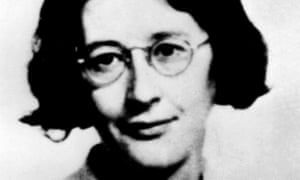
Truth in wartime ... the last photograph of Simone Weil. Photograph: UIG via Getty Images
Shawn is best known as a great playwright, but also writes astonishing essays. Theatrically enough, performance informs the grounding belief of this book: that we could all have been many other people, and that the person we believe we are is a role we play. Each day, Shawn notes, hundreds of thousands of babies are born, each with the same capacity as you or I to enjoy life, learn, and make the world a better place – and our decisions will affect whether they can. These brilliant, mischievous essays break our moral questions apart and reassemble them in a language that begins to sound like sanity.
“I don’t believe civilisation can do a lot more than educate a person’s senses,” Paley writes, and this is what her work does. In just a few dozen stories of breathtaking compression, written over 30 years, this collection brings to life the social and human complexity of New York in the middle decades of last century, seen from street level. Paley has compassion, even affection, for those who act badly, a warmth offset by a biting irony and wit. “If someone would hand me the first stone, I would not be ashamed to throw it,” a character remarks. “But at whom?”
Loosely structured as a Heart of Darkness in reverse, where the journey recounted moves from small-town Sudan to elite London society and back again, this depthless, elusive classic of Arab literature breaks open as it presents and imposes itself. Salih explores not just the corrosive psychological colonisation observed byFrantz Fanon, but a more complex two-way orientalism, in which the charms of western thought, embodied in its poetry and liberal ideals, prove irresistible, even as the novel’s Sudanese narrators understand these as the tempting fruit of a poisoned tree.
Written just before and during the second world war, these two long essays unearth a set of moral teachings antecedent to the Gospels, estranged by history but profoundly relevant to our time. Homer’s Iliad is remarkable, the essayists agree, for presenting warring sides with equal compassion. As Weil writes, only the person “who has measured the dominion of force, and knows how not to respect it”, is capable of justice and love.
Against the backdrop of the Holocaust, The Emigrants opens an oblique window on mid-century horrors by looking at four individuals on the margins of the central tragedy. Only by focusing on the smallest terms of individual experience might we begin, by implication, to get a sense of the benumbing scale of the destruction visited on a continent and a race. A faint gleam of hope can be seen in the ruins: that, while buried, the past is not wholly irrecoverable. In fact it is everywhere impressed on the world, if we can only train our attention to see it.

 Email
 Herbs are not only great in meals for spice and added flavor but are key to the nutritional density in the foods you eat. Herbs can protect you against diseases, clear toxins from your body, and provide you with vitamins and minerals.




The Secret Powers of Herbs and Spices
Which Herbs and Spices are the Most Potent Disease Preventers?
Selecting Spices for Their Medicinal Benefits
Turmeric—A Potent Cancer-Fighter!
Cinnamon—An Excellent Choice for Diabetics
Go Ahead, Spice Up Your Life!